
Workshop 2026
Official ICMI 2026 Workshop – October 5,
2026 (in person, Naples, Italy)
The GENEA (Generation and Evaluation of Non-verbal Behaviour for Embodied Agents) Workshop 2026 aims to
bring together
researchers from diverse disciplines working on different aspects of non-verbal behaviour generation,
facilitating
discussions on advancing both generation techniques and evaluation methodologies.
We invite contributions from fields such as human-computer interaction, machine learning, multimedia,
robotics, computer
graphics, and social sciences. This is the seventh installment of the GENEA Workshop,
to learn more about the GENEA Initiative, please go here.
The proceedings of the previous edition of the workshop can be found here.
Important dates
Submission Deadlines: All deadlines are set at the end of the day, Anywhere on Earth (AoE)
Call for papers
We are pleased to share the Call for Papers for the 7th edition of the GENEA Workshop, focusing on the generation and evaluation of non-verbal behaviours such as gesticulation, facial expressions, and gaze — essential components of natural interaction with embodied agents, including virtual agents and social robots.
Currently, behaviour generation is typically powered by rule-based systems, data-driven approaches such as generative AI, or hybrid models. For evaluation, both objective and subjective methods are used, though their application and validity are often debated. This workshop aims to bring together researchers from diverse disciplines working on various aspects of non-verbal behaviour generation, fostering discussion on advancing both generation techniques and evaluation methodologies.
✨ Topics of Interest
We invite original contributions on topics including (but not limited to):
- Automated synthesis of facial expressions, gestures, and gaze movements, including multimodal synthesis
- Closed-loop / end-to-end non-verbal behaviour generation (from perception to action)
- Use of LLMs/VLMs in the context of non-verbal behaviour synthesis
- New datasets, annotation methods, and analyses of existing datasets related to non-verbal behaviour
- Cross-cultural and multilingual influences on non-verbal behaviour generation
- Cognitive and affective models for non-verbal behaviour generation
- Ethical considerations and biases in non-verbal behaviour synthesis
- Subjective and objective evaluation methods for any of the above topics
📝 Submission Types
We welcome:
- Long papers (8 pages)
- Short papers (4 pages)
All submissions should follow the double-column ACM conference format. Pages containing only references do not count toward the page limit. Papers must be submitted in PDF format via OpenReview and prepared for double-blind review.
Accepted papers will be presented at the workshop and included in the ICMI companion proceedings.
Submission site: openreview.net/group?id=ICMI/2026/Workshop/GENEA
To encourage authors to make their work reproducible and reward the effort that this requires, we have introduced the GENEA Workshop Reproducibility Award.
Call for posters
The GENEA Workshop at ICMI 2026 will host an open poster session for advertising your late-breaking results and recently-published work to the community. Only a poster submission is required, no paper submission is needed to participate in the poster session, and these posters will not be part of any proceedings (i.e., non-archival). However, poster presentation does require a valid registration with ICMI to attend the workshop, and is subject to space constraints.
Paper topics include (but are not limited to) the following
- Automated synthesis of facial expressions, gestures, and gaze movements, including multi-modal synthesis
- Audio-, music- and emotion-driven or stylistic non-verbal behaviour synthesis
- Closed-loop/end-to-end non-verbal behaviour generation (from perception to action)
- Non-verbal behaviour synthesis in two-party and group interactions
- Using LLMs/VLMs in the context of non-verbal behaviour synthesis
- New datasets, annotation methods, and analyses of existing datasets related to non-verbal behaviour
- Cross-cultural and multilingual influences on non-verbal behaviour generation
- Cognitive and affective models for non-verbal behaviour generation
- Social perception and attribution of synthesised non-verbal behaviour
- Ethical considerations and biases in non-verbal behaviour synthesis
- Subjective and objective evaluation methods for all of the above topics
Poster guidelines
- Poster format: 1-page poster (no larger than A0 size; portrait is recommended). There is no specific template. The poster can be designed as you want.
- How to submit: please submit your poster draft (in PDF format) and/or poster abstract here (https://forms.gle/DczsreCHAUTGSonr9). We will acknowledge your submission within 24 hours. The submission deadline is 23:59, September 3, 2026 (Anywhere on Earth timezone). We will get back to you no later than September 16th to let you know if we are able to accommodate your poster at the event.
Reproducibility Award
Reproducibility is a cornerstone of the scientific method. Lack of reproducibility is a serious issue in contemporary research which we want to address at our workshop. To encourage authors to make their papers reproducible, and to reward the effort that reproducibility requires, we are introducing the GENEA Workshop Reproducibility Award. All short and long papers presented at the GENEA Workshop will be eligible for this award. Please note that it is the camera-ready version of the paper which will be evaluated for the reward.The award is awarded to the paper with the greatest degree of reproducibility. The assessment criteria include:
- ease of reproduction (ideal: just works, if there is code - it is well documented and we can run it)
- extent (ideal: all results can be verified)
- data accessibility (ideal: all data used is publicly available)
Invited speakers
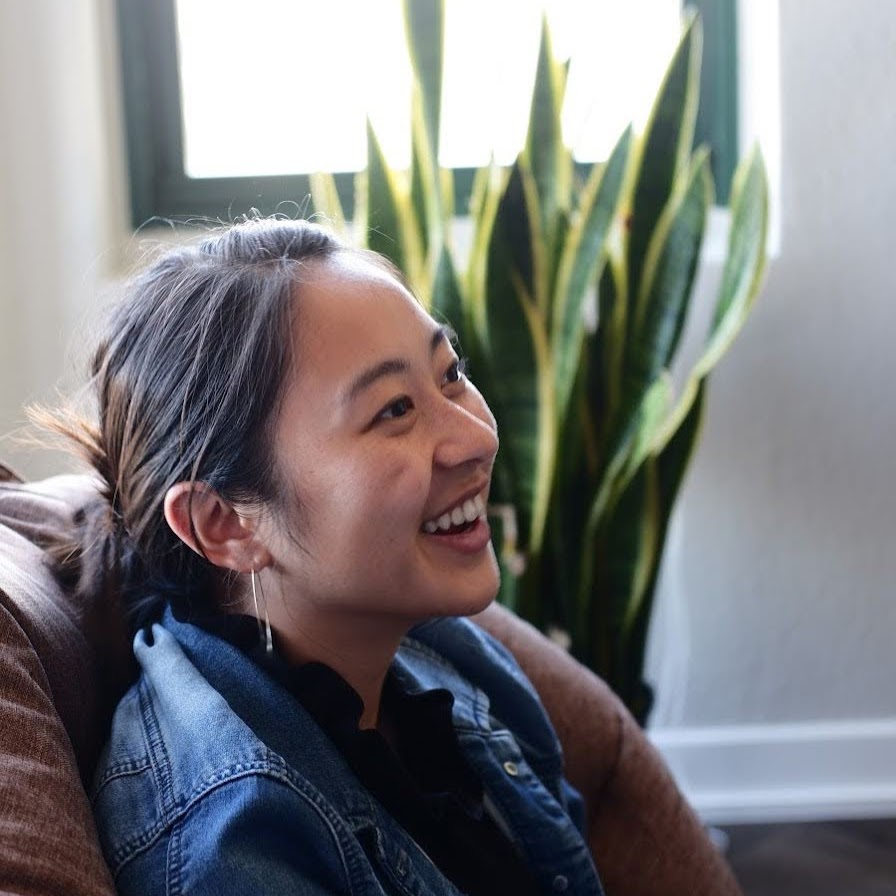
Evonne Ng
Biography
Evonne is a Research Scientist at Meta Reality Labs in Pittsburgh. Her research broadly investigates the full stack of large models for AI gesture and motion generation, spanning everything from data curation and modeling to real-time streaming and deployment. Previously, she completed her Ph.D. at UC Berkeley, where she was co-advised by Trevor Darrell and Angjoo Kanazawa.Jonas Beskow

Biography
Jonas Beskow is a Professor of Speech Communication, specialising in Multimodal Embodied Systems at KTH in Stockholm. He is also a co-founder and Senior R&D Engineer at Furhat Robotics. Jonas research interests encompass modelling, synthesis, and understanding human communicative signals and behaviours, including sign-language, speech, facial expressions, gesture, gaze, and the dynamics of face-to-face interaction. Specifically, he is passionate about integrating these elements into machines and embodied agents, both physical and virtual, to enable useful, engaging and dynamic interactions.Organising committee
The main contact address of the workshop is: genea-contact@googlegroups.com.
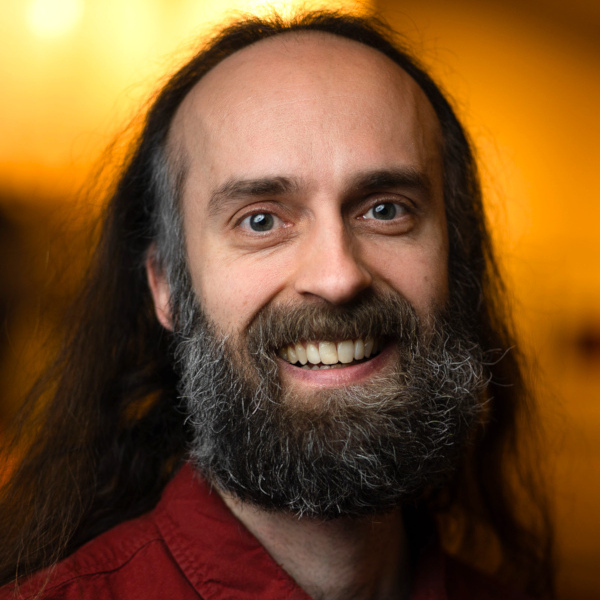
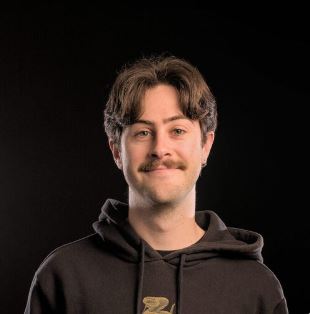
Workshop organisers





Join our community
Join our Slack space dedicated to the gesture generation research community.
In order to ensure the security and integrity of our community, we kindly ask you to fill out
this form
to obtain the invitation link.
Join us to share your work, data, interesting papers, questions, ideas, job opportunities and more.
And keep up to date with the latest workshop news by following us on X.